
Sam Hallas' Website
These telephones were used on private automatic exchanges (PAXs). Before the liberalisation of the PABX market it was quite common for a company to have a totally separate internal telephone system and a parallel network of extensions from the public exchange switchboard.
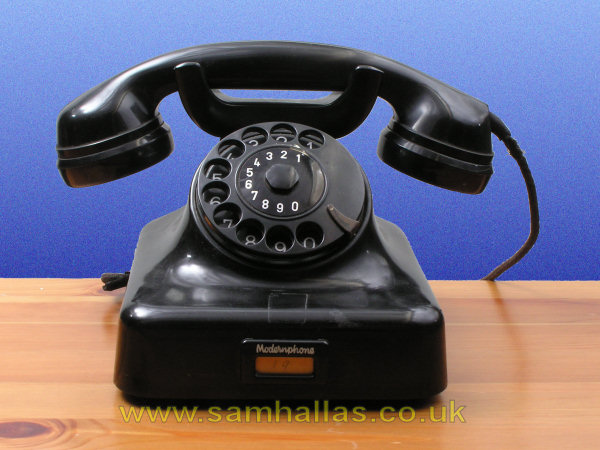 This telephone is badged "Modernphone", the name of a telephone systems
rental company. The base says "Made in Germany". Inside I found a circuit
diagram folded up and pushed under the induction coil, which says it is a Type
W48 Desk Telephone. The Induction coil and bell have the legend "DeTeWe", or Deutsche Telefon Werke,
a well-known supplier of telephones and switchboards. This confused me at first as I find that the W 48 was designed in 1948 by Siemens & Halske and became the main workhorse of the German PTT. However, I read that both Siemens & DeTeWe manufactured them and they were typically supplied by firms renting German PAXs. Lots more on its history at Alte-Telefone.de. I've made a rough translation of the page in this document - pictures are from alte-telefone.de
This telephone is badged "Modernphone", the name of a telephone systems
rental company. The base says "Made in Germany". Inside I found a circuit
diagram folded up and pushed under the induction coil, which says it is a Type
W48 Desk Telephone. The Induction coil and bell have the legend "DeTeWe", or Deutsche Telefon Werke,
a well-known supplier of telephones and switchboards. This confused me at first as I find that the W 48 was designed in 1948 by Siemens & Halske and became the main workhorse of the German PTT. However, I read that both Siemens & DeTeWe manufactured them and they were typically supplied by firms renting German PAXs. Lots more on its history at Alte-Telefone.de. I've made a rough translation of the page in this document - pictures are from alte-telefone.de
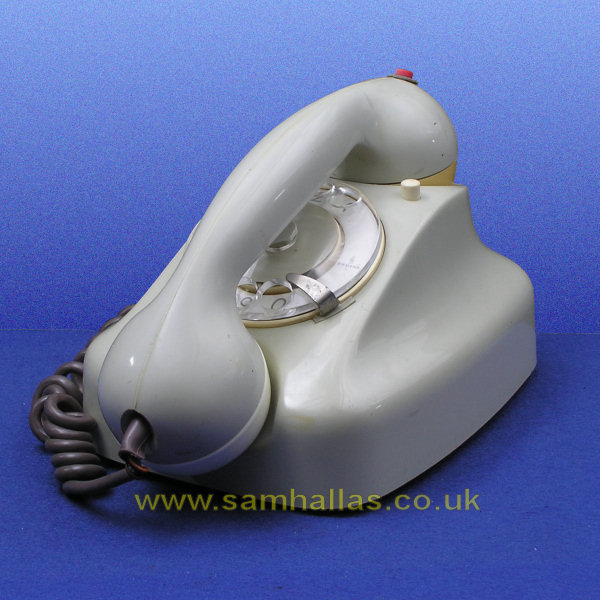 An unusual front-to-back handset position from Siemens & Halske, dating from 1954. In addition
to the white recall button on the body, this phone also has been fitted with a red button on
the handset. Another modification is the British 6-wire handset cord. The original would have been a plaited grey plastic cable like the grey T&N model below. It was available in several more pleasant colours than this rather utilitarian grey, as seen at Alte-Telefone.de.
An unusual front-to-back handset position from Siemens & Halske, dating from 1954. In addition
to the white recall button on the body, this phone also has been fitted with a red button on
the handset. Another modification is the British 6-wire handset cord. The original would have been a plaited grey plastic cable like the grey T&N model below. It was available in several more pleasant colours than this rather utilitarian grey, as seen at Alte-Telefone.de.
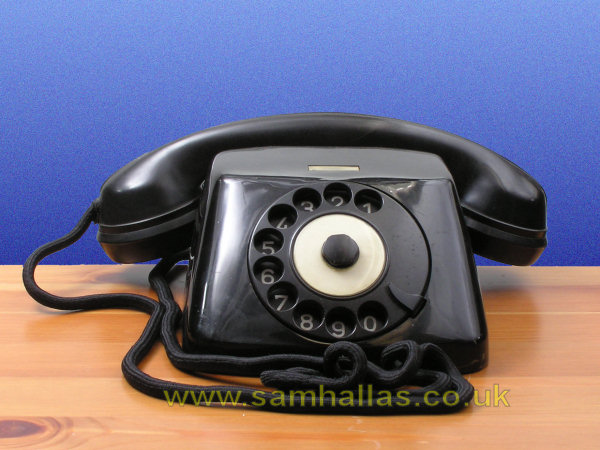
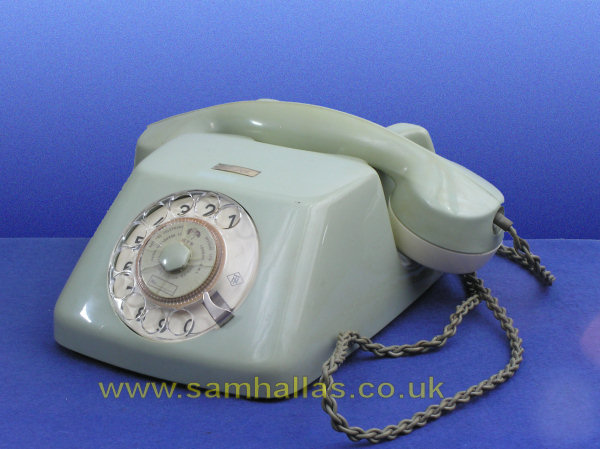 A pair of table telephones, by T&N, Telefonbau und Normalzeit, another major German telephone manufacturer. The progression of T&N E-series phones is shown in this picture, which shows the E1, E2 and E3 (courtesy of Remco Enthoven).
The black phone on the left appears to be an E1. It has a steel baseplate with a thermoplastic case, but the handset is Bakelite. The handset cord is covered with woven fabric. The transmitter and receiver inserts have sprung connections rather than wires. The base markings read S1a-112/16VE and 7-57, which latter may show the year of manufacture. Here is the circuit diagram inside which has the same number as marked on the base.
Right is a grey/ white telephone which is evidently an E2. The construction is also a steel base with a thermoplastic case, but this time the handset is plastic. The handset cord is a plaited plastic covered lead. The base marking reads S1a-112/72IE, which probably means the circuit is more or less identical, but a later revision. [You can see another picture of an E2 at: Historische Telefone].
Compare these two phones with the model below.
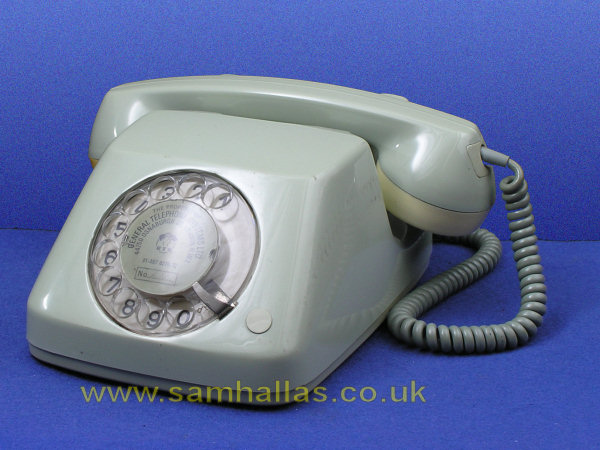 A table telephone, also by T&N, matches the appearance of the E3 in the T&N picture, which dates it about 1965. This one was used by General Telephone Systems Ltd, 44/50 Osnaburgh Street, London NW1, who rented telephone systems to companies up until the 1970s. The dial label has their name printed on it. The base, cover and handset are all thermoplastic. The receiver and transmitter inserts appear identical to those in the phone above, but the receiver has additional push-on connectors. Notice the subtle design changes from the E1 and E2 above. This phone has a similar footprint but is slightly taller. The dial and handset have changed and the plaited handset cord is replaced by an extensible coiled type.
I have found this circuit diagram in a drawer, which probably came from this phone, or one like it, as the terminal designations are identical. This is yet a later revision of the S1a theme seen in the above phones.
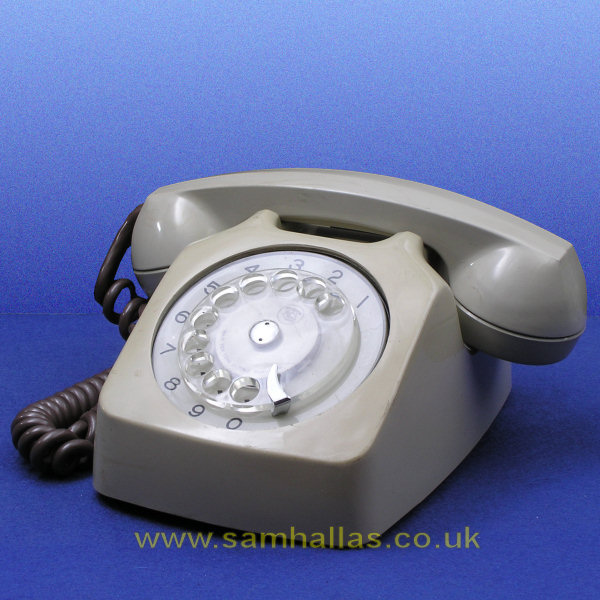 Although this telephone has strong similarity to the German designs
above, the base is stamped "Made in England". A sticker on the base proclaims
it is the property of the British Home and Office Telephone Co. Ltd., Autophone
House, 73 Great Peter St, SW1. The bell coils have distinctly German markings,
but the capacitor says it is GPO Batch Sampled. A curious mixture! This model is called Aristocrat FL-50. Those who worked with them say that they were very cheaply constructed and consequently flimsy.
Although this telephone has strong similarity to the German designs
above, the base is stamped "Made in England". A sticker on the base proclaims
it is the property of the British Home and Office Telephone Co. Ltd., Autophone
House, 73 Great Peter St, SW1. The bell coils have distinctly German markings,
but the capacitor says it is GPO Batch Sampled. A curious mixture! This model is called Aristocrat FL-50. Those who worked with them say that they were very cheaply constructed and consequently flimsy.
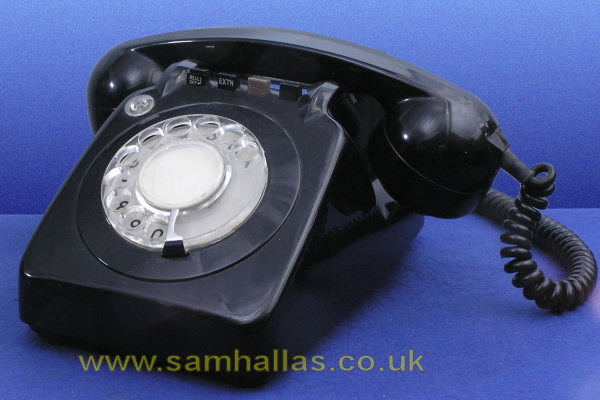
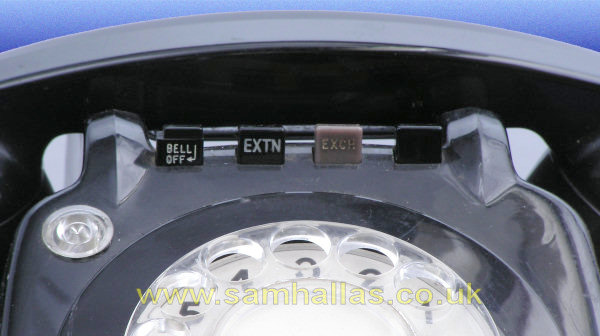 A telephone from Plessey which incorporates all the features of the Planphone 1 (see Plastic Era) within the telephone case. It was quite popular with the Railways.
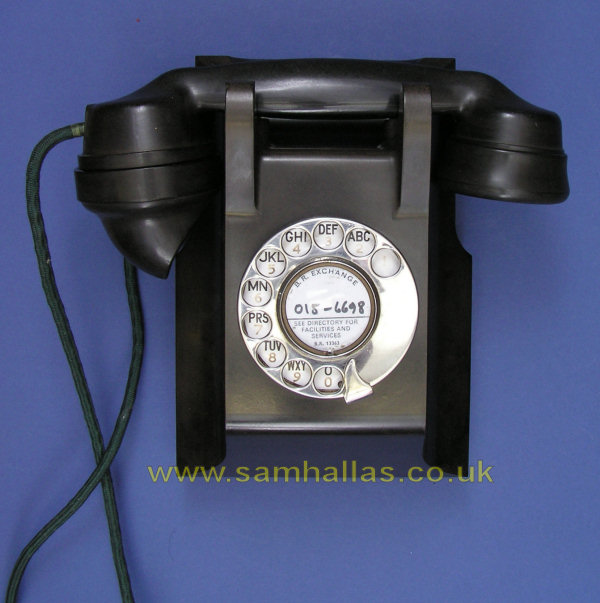
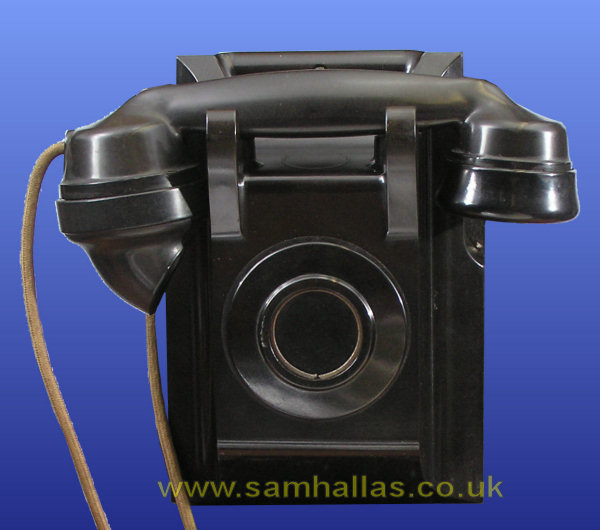 A very neat, self-contained wall telephone from ETL. The two here, N1070 and N1420 have identical case and circuitry, diagram No N19927, differing only in the presence of a dial. These models were popular with the railways and the samples here were recovered from abandoned sites on London Underground in the 1970s.
Next Subscriber's Apparatus - the other items that go to make a telephone installation.
 Corporate
Subs Apps
Corporate
Subs Apps